
Every reseller in Pakistan deals with returns sooner or later. A customer in Lahore gets a kurta that is a size too small. Someone in Karachi receives a phone cover that does not fit the model they ordered. A parcel reaches Peshawar a week late and the buyer no longer wants it. None of this means you are running your business badly. It simply comes with selling online, Handle Refunds & Returns as a Reseller.
What matters is how you respond. A calm, fair response can turn an annoyed buyer into a repeat customer, while a careless one can cost you money and reviews. This guide covers how to set up a refund policy for resellers in Pakistan, handle COD parcels, work with suppliers, and talk to customers when things go wrong P999 .
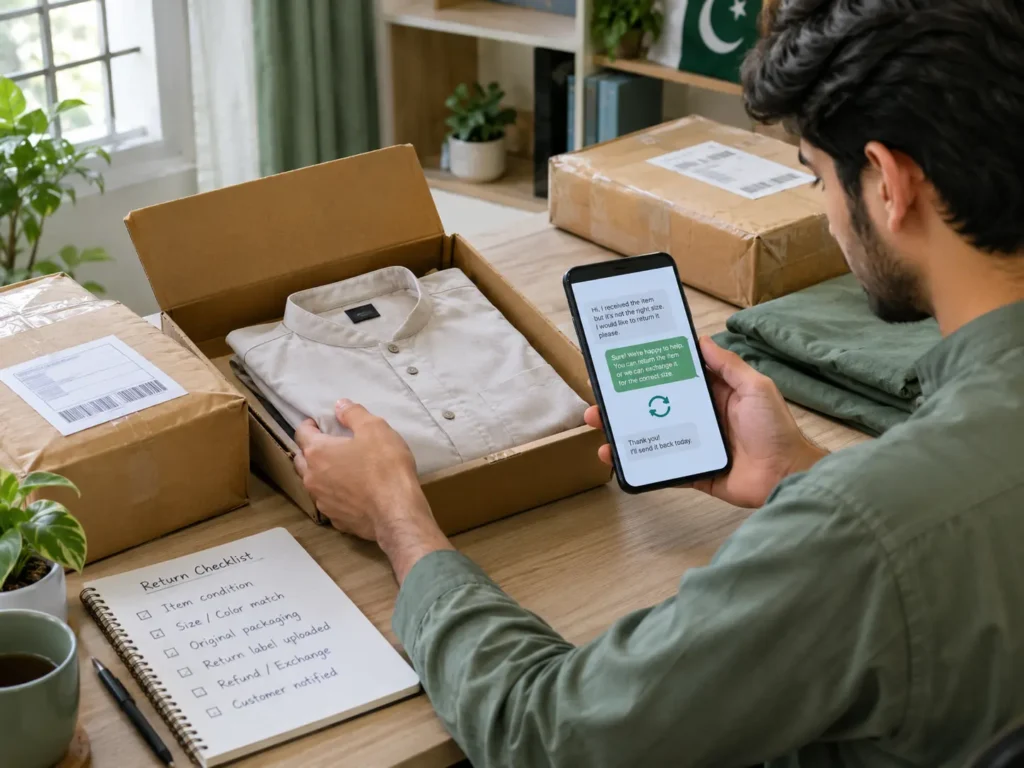
Understand Your Responsibilities as a Reseller
In most reselling setups, four parties are involved: you, your supplier or wholesaler, the courier company, and the customer. The customer only knows you. They paid you, they messaged you, and they expect you to fix the problem. It does not matter to them that the item came from a supplier in another city.
This is where many beginners get caught. They assume the supplier’s return policy automatically covers their customer. It often does not. A supplier may accept returns only within two days, only with an unboxing video, or only for defects and not for size issues. If you promise your customer seven days without checking, you may end up paying for the difference yourself.
So think of yourself as the person in the middle. You answer to the customer, and you negotiate with the supplier and courier. Your policy should reflect what you can realistically get backed up.
Create a Clear Refund Policy for Resellers in Pakistan Before You Sell
A written policy saves you from arguing the same points again and again. Put it on your page, website or pinned post, and send it to customers when they confirm an order. A practical policy should cover the following.
What your policy should include
- Eligible returns: wrong item, damaged item, manufacturing defect, or a size problem if you allow exchanges.
- Ineligible returns: used items, items without original packaging, or items the customer simply dislikes after use.
- Reporting deadline: how many days the customer has to contact you after delivery.
- Condition and packaging: unused, with tags, and in original packaging.
- Remedies: whether you offer an exchange, store credit or a refund, and in which situations.
- Return shipping: who pays in which case (see the shipping section below).
- Refund timing: a realistic expectation, such as “after we receive and check the item.”
- Products that cannot reasonably be returned: opened cosmetics, underwear, or personal care items are common examples. Check what applicable consumer rules say for your product category rather than assuming.
A sample policy you can adapt
“If your order arrives damaged, defective or different from what you ordered, message us within 48 hours of delivery with your order number and clear photos or an unboxing video. We will arrange an exchange or refund after checking the issue. For size exchanges, the item must be unused, with tags and original packaging, and reported within 3 days. Return shipping is paid by us for our mistakes or damaged items, and by the customer for change of mind or wrong size ordered. Opened cosmetics and personal care items cannot be returned unless damaged or incorrect. Refunds are processed after we receive and inspect the returned item, and we will tell you the expected timing when we confirm your refund.”
Change the days and terms to match what your supplier actually allows. A shorter, honest policy is better than a generous one you cannot honour.
How to Handle a Return Request Step by Step
You do not need a corporate process. A simple sequence works.
First, listen. Let the customer explain without jumping in with the policy. Many people calm down once they feel heard.
Second, ask for the order number and, where relevant, photos or a short video of the parcel and the product. Third, check what they sent against the order. Is it the wrong item, or the right item with a problem, or a change of mind?
Fourth, check it against your published policy. If it fits, tell them so clearly. If it does not, explain why politely and offer whatever alternative you reasonably can, such as an exchange.
Fifth, if your supplier is involved, contact them with the evidence right away, since many suppliers have short windows. Sixth, tell the customer what the solution is and what happens next. Finally, arrange the return, exchange or refund, and keep updating the customer until it is closed. Silence is what turns small complaints into public ones.
Handling Cash on Delivery Returns in Pakistan
COD orders in Pakistan are convenient for buyers but they bring their own headaches. Common situations include customers refusing delivery at the door, not answering the courier’s calls, giving an incomplete address, or the parcel being damaged in transit and sent back by the courier.
Refusal at the door versus a return after delivery
These are two different things. If a customer refuses the parcel before accepting it, the courier sends it back to you, and no money has changed hands. If the customer accepts and pays, then asks for a return later, it becomes a return request that should follow your policy, and you will need to refund the money you collected.
The cost problem
A returned COD parcel can quietly eat your profit. You may have paid for outbound shipping, and the courier may also charge for the return to origin. Courier companies do not all follow the same rules, so read the terms of the one you use and ask your account representative how return charges are applied. Then build that risk into your pricing.
To reduce refused parcels, confirm every COD order by phone or WhatsApp before dispatch, verify the address, and mention the price and delivery time again. It takes two minutes and can save you the cost of a full round trip.
What to Do When a Product Is Damaged or Incorrect
The first step is documentation. Ask the customer to keep the outer packaging and send photos of the parcel, the label and the product. For fragile items, a short unboxing video is even better. Do not discard the packaging yourself until the case is settled, because your supplier or courier may ask for it.
Examples differ by product. With clothing, a wrong size is usually an exchange issue, while a torn seam or colour mismatch is a defect. With electronics accessories like chargers, earbuds or phone covers, ask the customer to describe what is wrong and whether it was tested, since a compatibility mistake is different from a faulty unit. With cosmetics, a leaking bottle or broken seal is a clear complaint, but an opened product that someone simply did not like usually is not returnable. With household items like glassware or kitchen tools, breakage during delivery needs photos right away.
Once you have the evidence, contact the supplier, then offer the customer an exchange or refund based on the situation. Tell them clearly which one you are offering and why. Return eligibility can differ by product type, so state those differences in your policy.
How to Manage Refunds When Your Supplier Is Responsible
If you buy from a wholesaler or run a dropshipping setup, your refund is often only as good as your supplier’s cooperation. That is why you should agree on return terms before taking customer orders, not after a problem appears.
Ask your supplier plainly: What counts as a valid return? How many days do I have to report an issue? What evidence do you need? Do you replace stock or refund me? How quickly do you reply? Who pays return shipping when the mistake is yours, and when it is mine? Get the answers in writing, even if it is only a WhatsApp message.
When a supplier refuses responsibility, stay calm and share your evidence once more. If they still refuse, you may have to absorb the cost to keep your customer, and then reconsider whether that supplier is worth working with. A supplier who disappears when there is a problem is more expensive than a slightly pricier one who responds.
How to Refund Customers Who Paid Through Pakistani Payment Methods
For COD orders, the customer paid the courier, so your refund usually comes later through a method you agree on. Common options are Easypaisa, JazzCash or a bank transfer. Ask which one they prefer and confirm the account details in writing.
Do not assume every method works like an automatic reversal, and do not promise a fixed arrival time. Processing depends on the payment channel and your bank or wallet. Tell the customer once you have sent the money and share the transaction receipt, so they can check on their side.
One safety rule is non-negotiable: never ask a customer for a PIN, password or OTP, and never share your own. You only need their account title and number to send money. Anyone asking for codes is either confused or running a scam, and customers have learned to be wary of it.
Who Should Pay the Return Shipping Charges?
There is no single answer, but fairness helps. A reasonable approach, if it matches your policy and agreements, looks like this.
- You sent the wrong item: you pay, because the mistake is yours.
- The product arrived damaged or defective: you usually pay and claim from the supplier or courier where possible.
- The customer ordered the wrong size: the customer often pays, unless you offered free exchanges.
- The customer changed their mind: this is usually the customer’s cost, if your policy allows such returns at all.
- The courier returned an undelivered COD parcel: it depends on your courier terms and the reason for non-delivery.
Whatever you decide, it should follow your disclosed policy, your supplier agreement, your courier’s terms and any applicable consumer protection rules. If you are unsure about the legal side for your product category, get advice from someone qualified instead of guessing.
How to Deal With Angry Customers and Refund Disputes
Start by not taking it personally. Most angry messages come from disappointment or fear of losing money. Reply quickly, stay polite, acknowledge the problem and say what you will do next. Avoid long arguments in comments or public posts, and move the conversation to a private chat.
Template 1: Responding to an angry customer
“Assalam o Alaikum. I am sorry your order did not arrive as expected, and I understand how frustrating that is. Please send your order number and photos of the parcel and product, and I will check this today. Once I confirm the issue, I will tell you the exact solution, whether that is an exchange or a refund. Thank you for your patience.”
Template 2: Politely declining a return that is outside policy
“Thank you for contacting us. I have checked your request, and unfortunately this item cannot be returned because it was reported after our 3 day window and the packaging has been opened. I am sorry for the disappointment. If you would like, I can help with a discount on your next order or guide you if there is any warranty support available. We appreciate your understanding.”
If a dispute escalates, keep your chat history, order records, courier receipts and supplier messages together. Clear records make it easier to stay fair and to defend your side if a complaint goes to the courier, the platform or a consumer forum.
Final Thoughts
Handling returns well is part of building a trustworthy reselling business in Pakistan. A clear refund policy for resellers in Pakistan, agreed supplier terms, careful COD confirmation and honest communication will solve most problems before they grow. You will not be able to prevent every complaint, but you can control how you respond, and customers remember that long after they forget the product.
Start small. Write your policy this week, confirm return terms with your supplier, and save the two message templates above. Your future self will thank you the next time a parcel comes back.